Key Takeaways — Michigan Home Help 2026
- Home Help may pay for hands-on care for eligible Michigan Medicaid members.
- You usually need physical help with at least one daily task.
- The state individual caregiver rate is $17.13/hour.
- Want to know Cottage Home Care's current caregiver pay rates? Call our Michigan team at (313) 762-4272.
- Your county MDHHS office decides approval and care hours. Cottage can help with the steps.
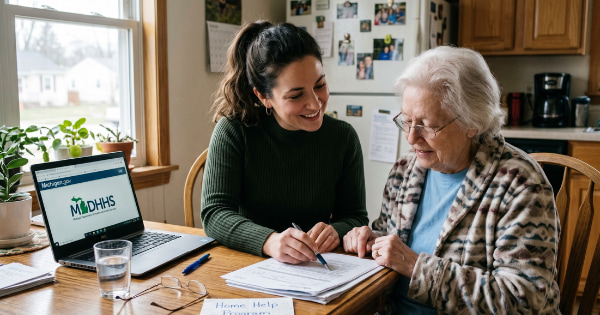
Michigan Home Help can pay for care at home. If you have Medicaid and need help with daily tasks, the program may help you. It may also pay an eligible family member or friend to provide your care. If someone you love needs help with bathing, dressing, or moving around, you may not know where to start. This 2026 guide explains who may qualify, what the program covers, and how to apply. It also explains caregiver pay and what to do next. You do not need to manage every form alone. Learn about Cottage's Michigan Medicaid Home Help support or use the steps below to start with your local MDHHS office.
Guide Navigation
What Is the Michigan Home Help Program?
Quick answer: Michigan Home Help is a Medicaid program. It helps pay for approved care at home when a person needs hands-on help with daily tasks.
The Michigan Department of Health and Human Services (MDHHS) runs Home Help. It can pay for personal care and some home tasks. It may also pay for certain complex care tasks. A state Adult Services Worker (ASW) checks what help the person needs. The ASW decides which tasks and hours the program will cover.
Home Help is not just for older adults. Children with disabilities may also qualify under special rules. For a child under 18, a parent cannot be the paid Home Help caregiver. The state checks each family's needs.
For official eligibility details, see MDHHS Home Help for clients. The state provider page is Michigan.gov/HomeHelp.
Who Qualifies for Michigan Home Help in 2026?
Quick answer: You generally need a qualifying Medicaid plan and hands-on help with at least one daily task. A state Adult Services Worker reviews your health needs and visits your home.
Financial Eligibility: Medicaid Rules Depend on Your Situation
There is no single income or asset limit for every Home Help client. Medicaid has different rules based on age, income, disability, and other facts. MDHHS lists Medicaid Fee-for-Service in its Home Help guidance. Ask a state worker if your coverage meets the program rules.
| What MDHHS checks | What you should know |
|---|
| Michigan Medicaid coverage | The person needs a Medicaid category that permits Home Help; an ASW reviews coverage and program requirements. | | Income and assets | The rules depend on the person's Medicaid eligibility category. A single asset cutoff cannot be used for every applicant. | | If you do not have Medicaid | Apply for Medicaid through MI Bridges; this is separate from the Home Help referral. | | If you have a Medicaid deductible | Ask your MDHHS worker how your deductible affects access to Home Help. |
Owning a home or car does not always stop you from getting Medicaid. The rules depend on your plan and situation. Ask MDHHS to check before you rule yourself out.
Functional Eligibility: Hands-On Help With at Least One ADL
- Bathing and grooming
- Dressing
- Eating
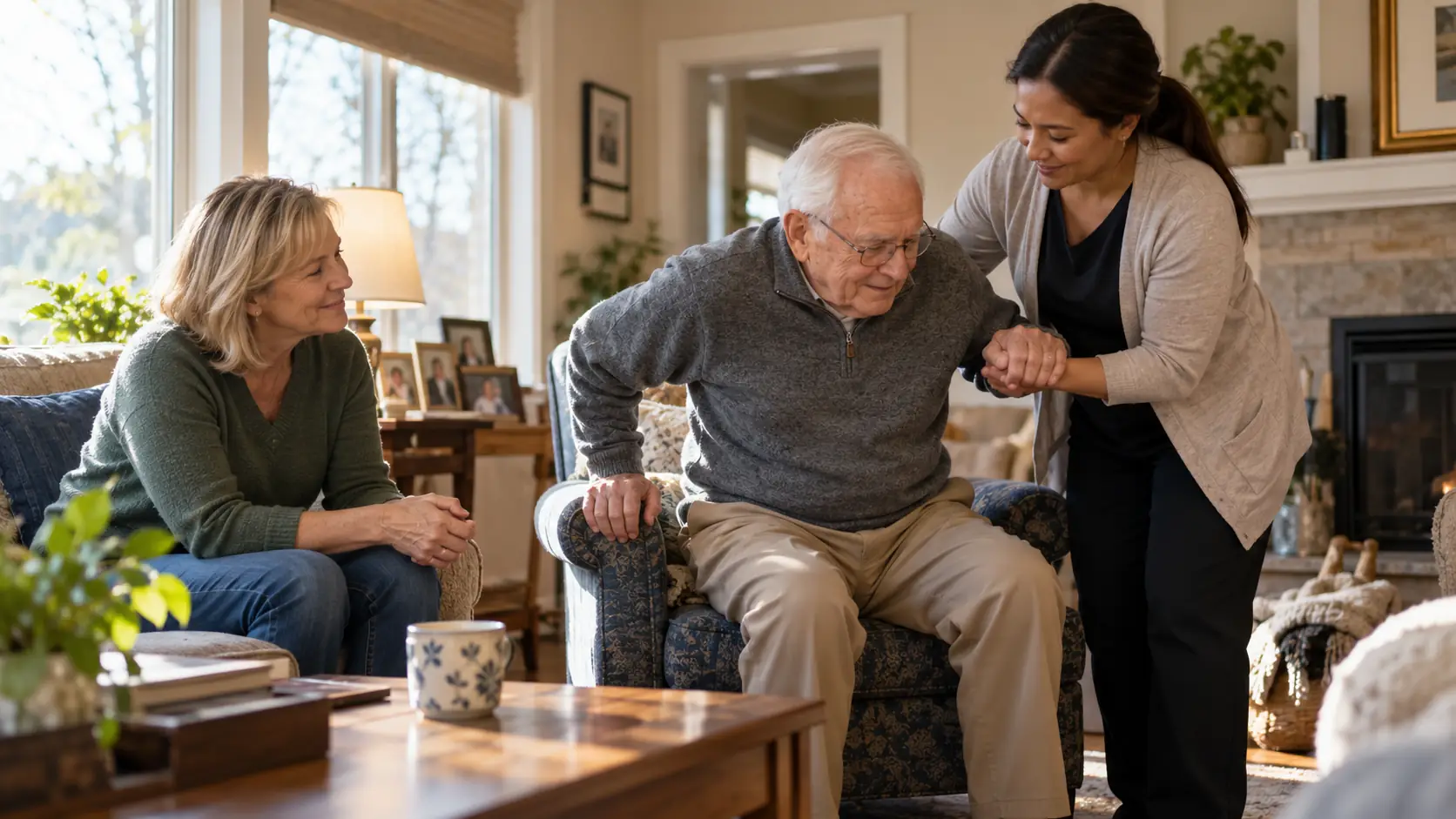
- Walking or moving within the home
- Moving between a bed and chair
- Using the toilet
A diagnosis alone does not set your care hours. The state worker checks which tasks need physical help. The worker then reviews what the program can pay for. Reminders and supervision alone are not covered.
Read Cottage's Michigan Medicaid application guide if Medicaid coverage has not been arranged.
What Services Does Michigan Home Help Cover?
Quick answer: Home Help can pay for approved personal care and some home tasks. Each task must meet state rules. Your state worker decides what is covered.
Activities of Daily Living (ADLs)
- Bathing and personal hygiene
- Dressing and grooming
- Eating assistance
- Moving around and transferring inside the home
- Toileting support
Instrumental Activities of Daily Living (IADLs)
- Meal preparation and meal cleanup
- Light housework and laundry
- Shopping for food and needed items
- Help with taking medication, when the specific task is authorized
Complex Care Tasks
The program also lists some complex care tasks. Examples include catheter care, feeding tube care, range-of-motion tasks, wound care, and breathing care. These tasks are not approved for everyone. The state must assess the need. Ask Cottage which approved tasks its team can safely provide.
Not covered: Home Help does not pay for reminders alone, supervision, heavy cleaning, repairs, rides, or yard work. Telling someone to take a pill is not the same as giving approved hands-on help with medicine.
Need skilled nursing or medical therapy? That may fall under a separate Medicaid Home Health benefit. MDHHS explains the difference between Home Health and Home Help.
Can a Family Member Get Paid as a Home Help Caregiver?
Quick answer: Yes. A qualified adult child, sibling, relative, or friend can often be paid to give approved Home Help care. The client chooses the caregiver, subject to state rules.
To qualify as a paid caregiver, a person generally must:
- Be at least 18 years old.
- Not be the care recipient's spouse.
- Not be a parent caring for their own child younger than 18.
- Not be a person who also receives Home Help services.
- Complete CHAMPS enrollment and required background screening.
- Be authorized to provide the specific client's approved care.
The care recipient has the right to choose, change, or stop using a caregiver. Payment is for approved care that is properly documented, not for all time spent helping a loved one.
For a more detailed caregiver guide, read how to get paid to care for a family member in Michigan.
How Much Do Michigan Home Help Caregivers Get Paid in 2026?
Quick answer: In 2026, Michigan lists an individual Home Help caregiver rate of $17.13 per approved hour. This state rate is different from an agency employee wage. To ask about current caregiver pay at Cottage Home Care, call (313) 762-4272.
| 2026 payment category | Rate | What the amount means |
|---|
| Individual Home Help caregiver | $17.13/hour | State-published individual caregiver rate: $13.73 base plus a $3.40 direct care worker increase. | | MDHHS-approved Home Help agency reimbursement | $27.00/hour | Amount the state pays an approved agency provider. This is not the employee wage. | | Cottage Home Care caregiver pay | Call for current rates — (313) 762-4272 | Employee wages are separate from state rates. Our Michigan team can explain current caregiver pay information; eligibility, available hours, and job terms vary. |
These state rates apply across Michigan's 83 counties. The source is MDHHS Adult Services Manual ASM 138, dated January 1, 2026. The state lists the same $17.13 individual rate for every county.
Important: The $17.13 individual provider rate and $27 agency reimbursement rate are state program figures, not Cottage employee wages. For Cottage's current caregiver pay rates, call (313) 762-4272. Pay and available hours depend on the position and employment terms.
What Changed in Michigan Home Help in 2026?
Quick answer: Michigan added another medical needs form in May 2026. The state raised individual caregiver pay in January. EVV started in 2024, not in April 2026. A provider sign-in change took effect in October.
1. New Medical Certification Option Added on May 1, 2026
As of May 1, Michigan accepts MDHHS-6200, the Adult Services Medical Needs Certification. The older DHS-54A form is still allowed. The state also accepts an eligible VA form in some cases. Ask your worker which form fits. An approved medical provider must fill it out.
You do not need to start over just because a valid DHS-54A was used. Read MDHHS Bulletin MMP 26-09 for the May 2026 rule.
2. Home Help Individual Caregiver Rate Increased in January 2026
Michigan's individual Home Help rate went to $17.13/hour on January 1, 2026. This is a state program rate, not an agency employee wage. To discuss current caregiver pay at Cottage Home Care, call (313) 762-4272.
3. EVV Requirements Began in 2024 — Some Exemptions Apply
Non-exempt agency caregivers began using Electronic Visit Verification (EVV) on July 1, 2024. Non-exempt individual caregivers began on September 3, 2024. EVV logs key facts about each care visit. Caregivers may use the HHAeXchange+ app or another method the state allows.
Some Home Help visits do not require EVV. Examples include care for a person who lives with the caregiver, some group settings, and certain visits that also include behavioral health care. Ask your state worker what applies. Even if EVV does not apply, you must still use the required service records.
4. October 2026: Provider Portal Sign-In Changed
Since October 5, 2026, HHAeXchange portal users must sign in through Michigan's MiLogin system. Use the state’s MiLogin instructions for help.
How to Apply for Michigan Home Help — Step by Step
Quick answer: Contact your local MDHHS office and ask for Home Help. If you lack Medicaid, apply for coverage through MI Bridges as a separate step.
- Check Medicaid coverage. If you do not have Medicaid, use MI Bridges or ask your local MDHHS office about enrollment.
- Ask for a Home Help referral. The client, family member, or another person may contact the local MDHHS county office by phone, mail, fax, or in person.
- Complete the Adult Services Application (DHS-390). The care recipient or guardian signs it. The ASW will explain how to return the form.
- Complete medical needs certification. The ASW normally provides MDHHS-6200. DHS-54A also remains a valid medical needs form under the 2026 policy. The accepted form must be completed by an approved medical professional.
- Complete the in-home assessment. The ASW meets with the client, reviews hands-on care needs, and evaluates the tasks and hours requested.
- Choose a caregiver. The client may choose an eligible adult family member, friend, or approved agency. CHAMPS approval and background screening must be completed before payment.
- Begin authorized care and verify services. Follow the applicable EVV, CHAMPS ESV/PSV, and agency reporting rules. Do not assume payment starts before approval and proper documentation.
How long does it take? MDHHS says an ASW sends a written approval or denial notice within 45 days under the Home Help process. The time to arrange a caregiver and begin authorized services may differ. Cottage can help track paperwork and prepare you for the assessment, but it cannot guarantee approval or a faster state decision.
Before your home assessment, have these ready:
- A short list of daily tasks that are hard to do alone.
- The times you need hands-on help with each task.
- Your health records and the medical needs form, if available.
- Your chosen caregiver, if one has been selected.
Share what a normal day is like. Be clear about the tasks you cannot do safely on your own. Use the official MDHHS Adult Services forms page to find DHS-390 and MDHHS-6200. Michigan Home Help CHAMPS Payment Schedule for 2026
Quick answer: Michigan posts a pay schedule for individual Home Help caregivers. It shows when to send service records and gives estimated payment dates.
The official file is DHS-1356, Home Help Payment Schedule 2026. It covers CHAMPS Electronic Service Verification (ESV) and Paper Service Verification (PSV). Dates are estimates. The state does not promise that each payment will arrive on a set day.
- CHAMPS ESV tasks may be entered after services are provided or submitted for the month according to the state's rules.
- A paper PSV for a service month generally cannot be submitted before the first day of the following month.
- Payments depend on approved hours, valid verification, state processing, and the caregiver's payment arrangement.
- Cottage agency payroll dates may be different from the state schedule for individual caregivers.
View the official 2026 Home Help payment schedule (DHS-1356 PDF).
Michigan Home Help vs. Other Care Options
Home Help is not the only way to get care. Your options depend on your health, Medicaid coverage, Medicare status, and the type of help you need. These programs have different rules.
| Option | What it mainly provides | Who may qualify / who pays |
|---|
| Medicaid Home Help | Approved hands-on personal care and related tasks at home. | People with qualifying Medicaid coverage and assessed care needs. | | MI Choice Waiver | Long-term services and supports in the home or community. | Eligible people who meet a nursing-facility level-of-care standard and other waiver rules. | | MI Coordinated Health (MICH) | Integrated Medicare and Medicaid coverage and eligible long-term supports. | Certain Medicare-and-Medicaid members in covered Michigan regions; plan rules apply. | | Private pay home care | Family-arranged nonmedical personal and companion care. | The client or family pays under a private service agreement. | | Home Health | Medical and skilled services such as nursing and therapy. | Coverage depends on medical need and the person's plan or benefits. |
Read Cottage's guides to the MI Choice Waiver, MI Coordinated Health, and Michigan private pay home care. Eligibility, covered areas, and benefits differ.
Cost note: Medicaid may pay for approved Home Help tasks. That does not mean every expense is free. A deductible or a service the state does not cover may still affect your cost. Ask MDHHS what applies to your case.
Common Mistakes That Can Delay a Home Help Application
- Assuming DHS-54A is no longer valid. MDHHS-6200 was added in 2026; DHS-54A remains a valid option under the state policy.
- Confusing a Medicaid application with a Home Help referral. MI Bridges is for Medicaid enrollment; start the Home Help request with your county MDHHS office.
- Using one asset number for every Medicaid case. Financial rules depend on the Medicaid category.
- Requesting hours for reminders or supervision alone. Home Help focuses on authorized covered tasks involving physical help.
- Choosing a caregiver who cannot be paid. A spouse or parent caring for a child under 18 is not an eligible paid Home Help caregiver.
- Starting paid services before authorization. Caregiver selection, CHAMPS enrollment, and documentation must be complete.
- Ignoring EVV or service verification. Exemption rules exist, but caregivers must follow the applicable documentation rules.
- Forgetting to follow up on missing paperwork. Keep copies of forms and ask your ASW what is still required.
If the application is denied, review the written notice. Michigan provides a hearing process for decisions the client disagrees with.
How Cottage Home Care Helps Michigan Families
Cottage Home Care was founded in 2019. Our Michigan team helps families in all 83 counties. We explain Home Help and other care options. We also help families keep track of the steps from start to finish.
Need local help? Read about home care in Detroit and Wayne County. We can also discuss your county's options when you call. Our team can help you:
- Understand your care options: Learn the difference between Home Help, MICH, MI Choice, and private pay care.
- Organize paperwork: Review what the ASW requests, help gather documents, and track next steps.
- Paperwork support: We help you collect forms, track missing items, and prepare for the state visit.
- Daily follow-up: Our team checks the status of open paperwork each workday and shares updates as they become available. State processing times still vary.
- Find support in your language: Ask our team about available language assistance and caregiver matching in your community.
- Care in your language: Ask us about language help and caregiver matching in your county.
We can explain and help with the process; MDHHS remains responsible for eligibility, care authorization, and state payment decisions. We do not promise a particular number of hours, faster approval, or a guaranteed caregiver placement.
Talk with Cottage about Michigan home care Frequently Asked Questions
These answers cover the questions Michigan families most often ask about getting care and becoming a paid caregiver.
What is the Michigan Home Help Program?+It is a Michigan Medicaid personal care program that pays for approved help with daily activities in the home. MDHHS decides eligibility and the services allowed. Who qualifies for Michigan Home Help in 2026?+A person must have qualifying Medicaid coverage, a medical need that is properly certified, and a need for physical help with at least one activity of daily living. An MDHHS Adult Services Worker assesses the person's needs. Can my adult child or another family member be paid to care for me?+Often, yes. An eligible adult child, sibling, other relative, or friend can be a Home Help caregiver if approved through CHAMPS and the program requirements. Spouses and parents of children under 18 cannot be paid as Home Help caregivers. How much are Home Help caregivers paid in Michigan in 2026?+Michigan's published individual Home Help caregiver rate is $17.13 per authorized hour. Agency employee wages are separate from that state payment and from state agency reimbursement. For Cottage Home Care's current caregiver pay information, call (313) 762-4272. Is the old DHS-54A form still accepted?+Yes. MDHHS Bulletin MMP 26-09 allows either the MDHHS-6200 or DHS-54A medical needs form, when completed by an eligible medical provider. Ask your ASW which to use. What is Electronic Visit Verification (EVV)?+EVV records required information for Medicaid-funded care visits. For non-exempt Home Help agency caregivers it began July 1, 2024, and for individual caregivers September 3, 2024. Some approved visits are exempt. Service verification rules still apply. How long does Michigan Home Help approval take?+MDHHS states it sends a written Home Help decision within 45 days under the application process. Caregiver enrollment and the start of authorized services may take additional time. Does Home Help operate in all 83 Michigan counties?+Home Help is a statewide program. Cottage Home Care MI reports service coordination across all 83 Michigan counties, although caregiver availability and program authorization must be checked for each case. What is the difference between Home Help and Home Health?+Home Help supports approved everyday care needs, such as bathing and dressing. Home Health is a separate benefit for skilled services, such as nursing and therapy. MDHHS also lists certain authorized complex tasks within Home Help. What if I earn more than an income limit I saw online?+Do not assume you are ineligible based on one online number. Michigan Medicaid rules depend on the coverage category and circumstances. Ask MDHHS to review your case. Where can I get the 2026 CHAMPS payment schedule?+Who should I call about CHAMPS caregiver enrollment?+Call Michigan's Home Help Provider Support at 800-979-4662. For client Home Help eligibility and referral, contact the Adult Services unit at your local MDHHS county office. Does Home Help include respite care?+Home Help pays for specific authorized care tasks. Dedicated respite services are generally evaluated under other Medicaid or community programs, including certain waiver options. Ask your worker which program fits your needs. Can Cottage guarantee I will qualify or get paid quickly?+No agency can guarantee an MDHHS approval or payment date. Cottage can help explain options, organize paperwork, support the caregiver process, and follow up on the next steps. How many hours of Home Help can Michigan approve?+There is no set statewide maximum for every client. A state worker assesses each person and approves the tasks and hours that meet the rules. Ask your ASW how your hours were set. Program policy checked October 9, 2026. Sources: MDHHS Home Help client guide; MDHHS MMP 26-09 (medical forms); ASM 138 (2026 caregiver and agency rates); MDHHS 2026 payment schedule. Cottage employee compensation is separate from the published state caregiver and agency reimbursement rates. For current Cottage caregiver pay information, please contact the Michigan team directly. Program details may change. State rules and written authorization control coverage.
|
|


 Sabine DurgaramDPS/RN