
Seniors Living Alone
Older adults who have fewer social connections and benefit from regular visits, conversation, and light assistance.

Companion care provides seniors and individuals with disabilities the support they need to live independently and with dignity.
A clear summary of what this service includes and who it supports — written for families making care decisions.
RN-led care team
Companion care from Cottage Home Care brings warmth, conversation, and meaningful connection to seniors and adults who want to remain independent at home. A trained companion visits regularly to share hobbies, accompany your loved one on errands, prepare light meals, and provide social engagement that helps prevent loneliness. Unlike clinical home health, companion care focuses on emotional wellbeing, safety, and daily quality of life — with light housekeeping, medication reminders, and transportation available as needed. Cottage matches each client with a screened caregiver backed by an RN-led care team. As needs evolve, personal care can be added without switching agencies. For qualifying families, companion care may be covered under Medicaid at no out-of-pocket cost. Cottage serves families across 6+ states with flexible scheduling and a free consultation to help you understand coverage before care begins.
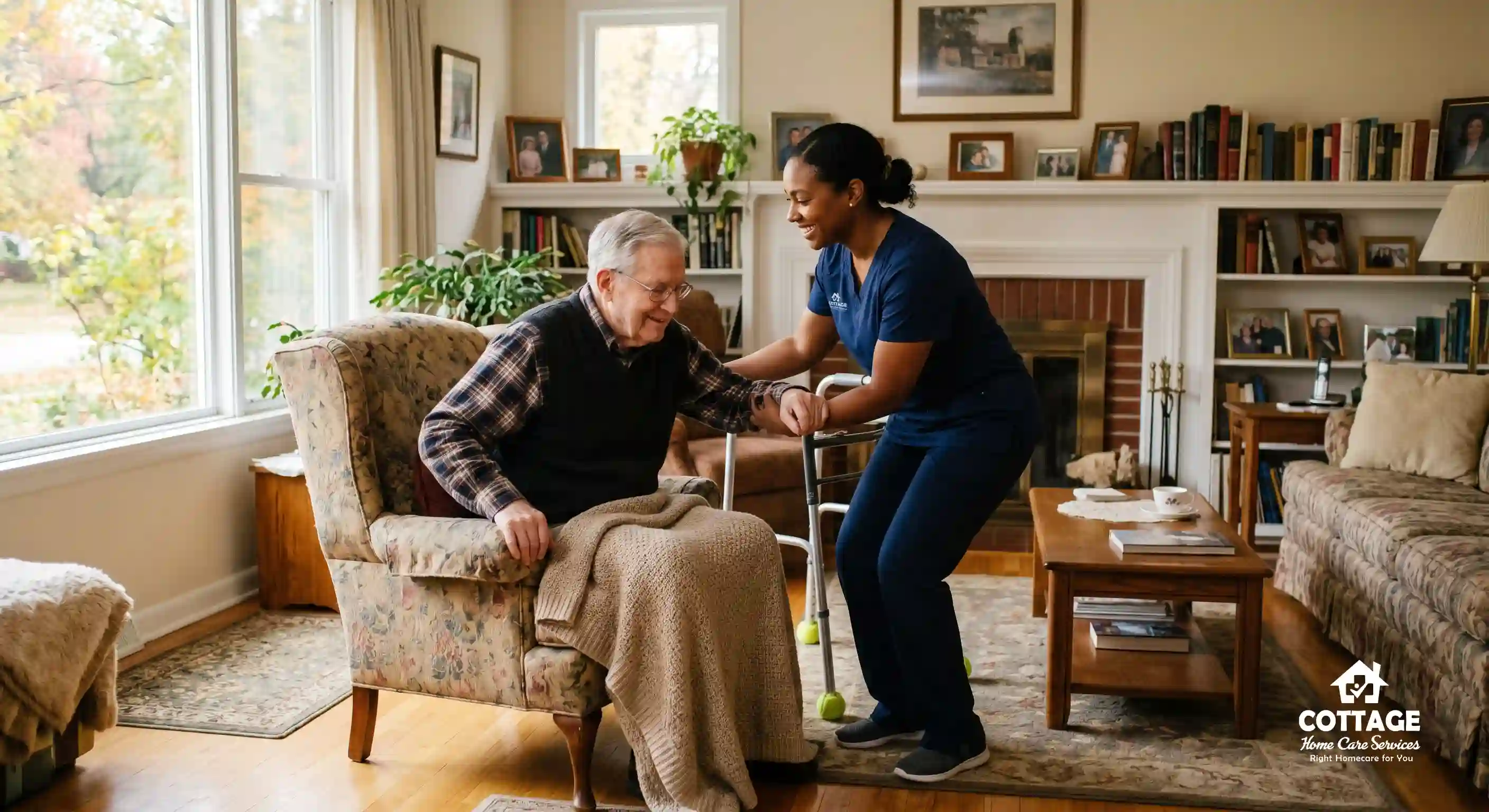
As people spend more time at home, feelings of loneliness and concerns about safety can grow. A visit from a caring Cottage Home Care companion brings warmth, reassurance, and meaningful connection to each day helping clients feel supported, engaged, and less alone.
Our companion caregivers are experienced, compassionate, and backed by a dedicated care team to ensure high-quality support. They provide personalized one-on-one attention sharing conversations, enjoying favorite activities, and offering light assistance around the home.
As needs change, Cottage can easily add personal care services such as help with bathing, dressing, and meal preparation so your loved one can continue living safely and independently at home. For qualifying families, companion care may also be covered under most Medicaid plans at no cost.
Companion care covers a wide range of social, emotional, and practical support services — all delivered in the comfort of home.
Enjoy meaningful conversations, friendly companionship, social activities, hobbies, games, reading, and light errands that help seniors stay engaged, connected, and independent.
Board games, card games, puzzles, crafts, reading, gardening, and any activity your loved one enjoys and looks forward to.
Doctor appointments, grocery shopping, pharmacy pickups, religious services, social outings — safely there and back.
Planning and preparing nutritious, delicious meals and snacks while accommodating dietary needs, preferences, and restrictions.
Tidying up, laundry, dishes, vacuuming — keeping a clean, safe, and organized home environment for your loved one.
Friendly reminders to take medications on time — keeping your loved one on track without the stress of managing it alone.
Older adults who have fewer social connections and benefit from regular visits, conversation, and light assistance.

Anyone showing signs of social withdrawal, depression, or reduced motivation due to isolation.

Clients with mild cognitive impairment or early dementia who benefit from mental stimulation and consistent social interaction.
Companion care is the right fit when someone needs more social engagement, light daily support, or relief from the isolation of living alone.
Older adults who have fewer social connections and benefit from regular visits, conversation, and light assistance.
Anyone showing signs of social withdrawal, depression, or reduced motivation due to isolation.
Clients with mild cognitive impairment or early dementia who benefit from mental stimulation and consistent social interaction.
Adults with physical limitations who can't easily leave the house but need transportation, errands, and company.
Patients recently discharged from hospital or rehab who need someone to help them safely transition back to home life.
Families who need a trusted break from caregiving while knowing their loved one is engaged, safe, and happy.
Companion care covers a wide range of social, emotional, and practical support services — all delivered in the comfort of home.
Reach out by phone or complete our eligibility form. A care advisor will call you within hours.
We visit your home (or speak by phone) to understand your loved one's needs, personality, and preferences.
We select 2–3 companion caregivers who match your loved one's interests and introduce you to your top choice.
Your companion caregiver starts their visits. We check in regularly to ensure everything is going well.
Absolutely. Companion care is designed specifically for seniors who live alone and need regular social interaction, emotional support, and safe company. A trained companion caregiver visits regularly to talk, play games, go for walks, or simply be present — reducing loneliness and improving quality of life.
Yes — companion care is often an ideal starting point for someone with early-stage dementia. A companion caregiver provides consistent routines, gentle engagement, and supervision that helps slow cognitive decline while keeping your loved one safe and stimulated at home.
In many states, companion care services are fully covered by Medicaid with no out-of-pocket cost to eligible clients. Cottage Home Care will verify your loved one's Medicaid coverage and explain exactly what is included at no cost to you.
Yes — many families use companion care as respite care, allowing a daughter, son, or spouse to take a break from daily caregiving duties without worrying about their loved one being alone. Regular companion visits reduce caregiver burnout and give families peace of mind.
Companion care can typically begin within 24–48 hours of your initial call. Cottage Home Care handles the intake process quickly so that your loved one has support as soon as possible.